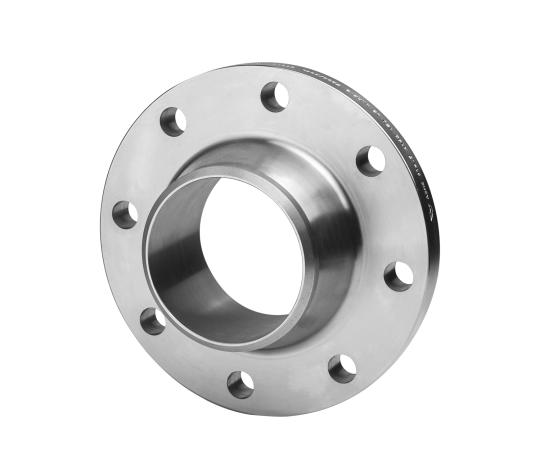
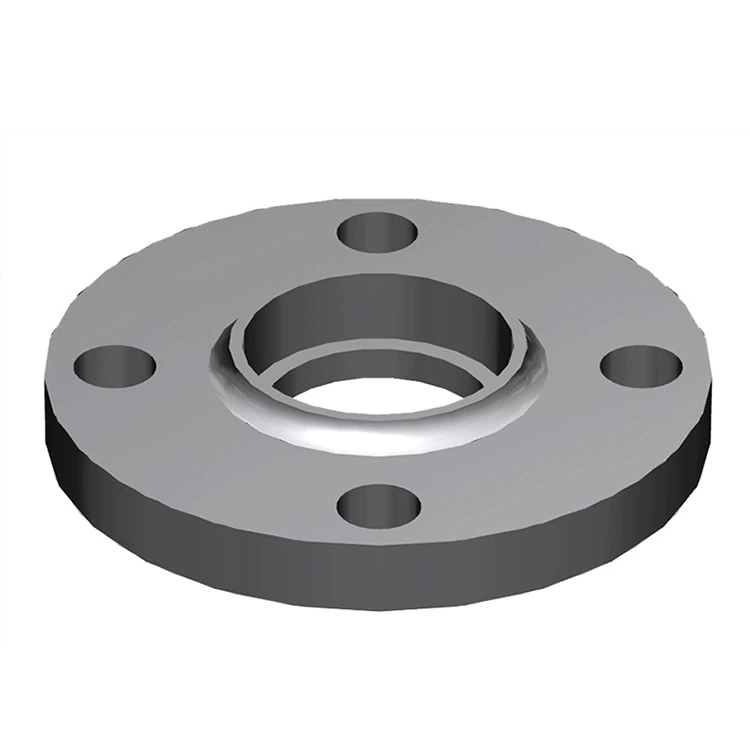
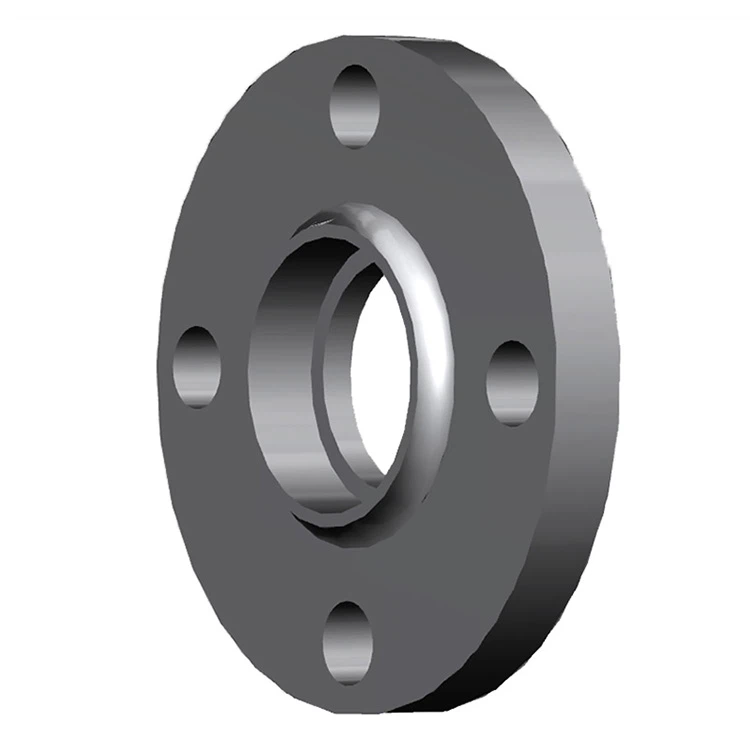
Forged Flange by Xingsheng Mechanical delivers superior strength, precision engineering, and reliable performance, ensuring secure connections and long-lasting durability for industrial piping and pressure systems.
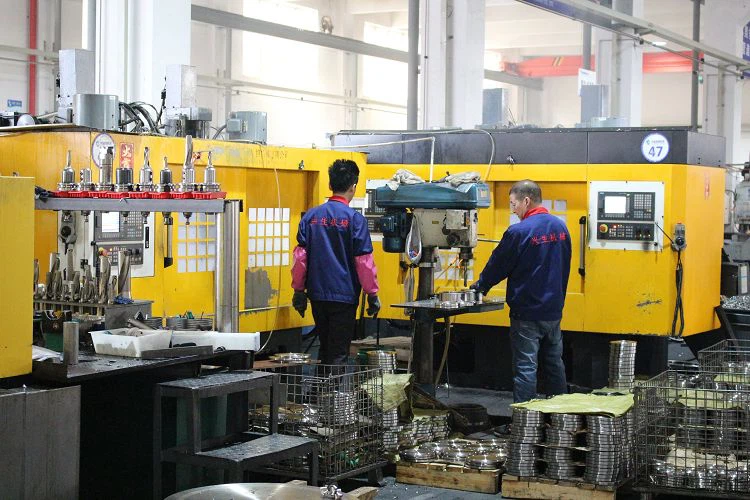
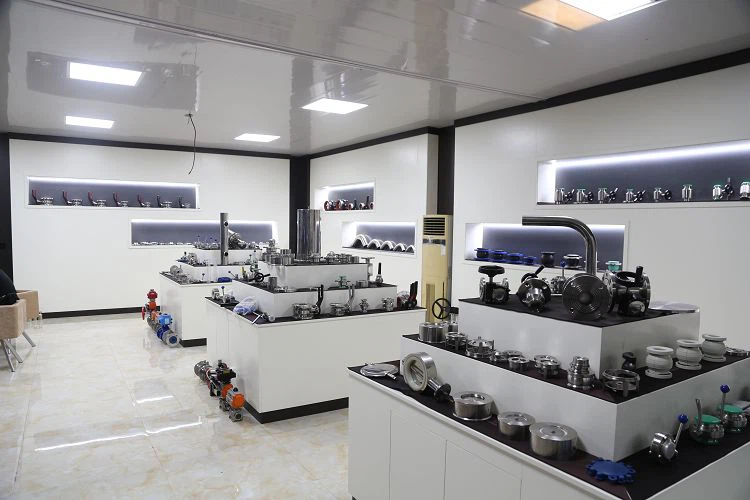
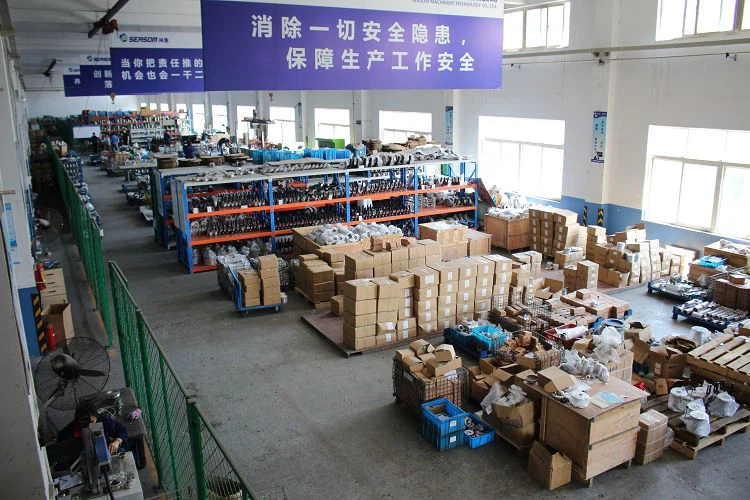
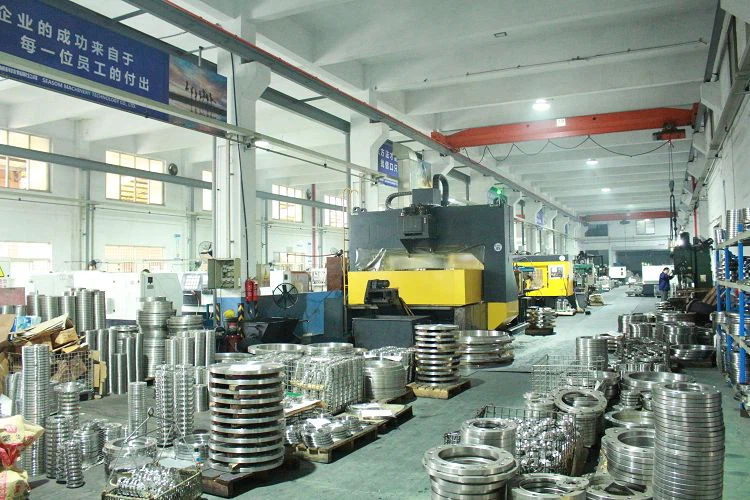
Xingsheng Mechanical Technology Co., Ltd is located in Wenzhou city, Southeast coast of China. It is established in the year 2005, with a registered capital of 50 million RMB. In the year 2022 Xingsheng has over 150 staff, 10000 square meters of workshop, and over 20 million (USD) annual turnover.
Complete Qualifications
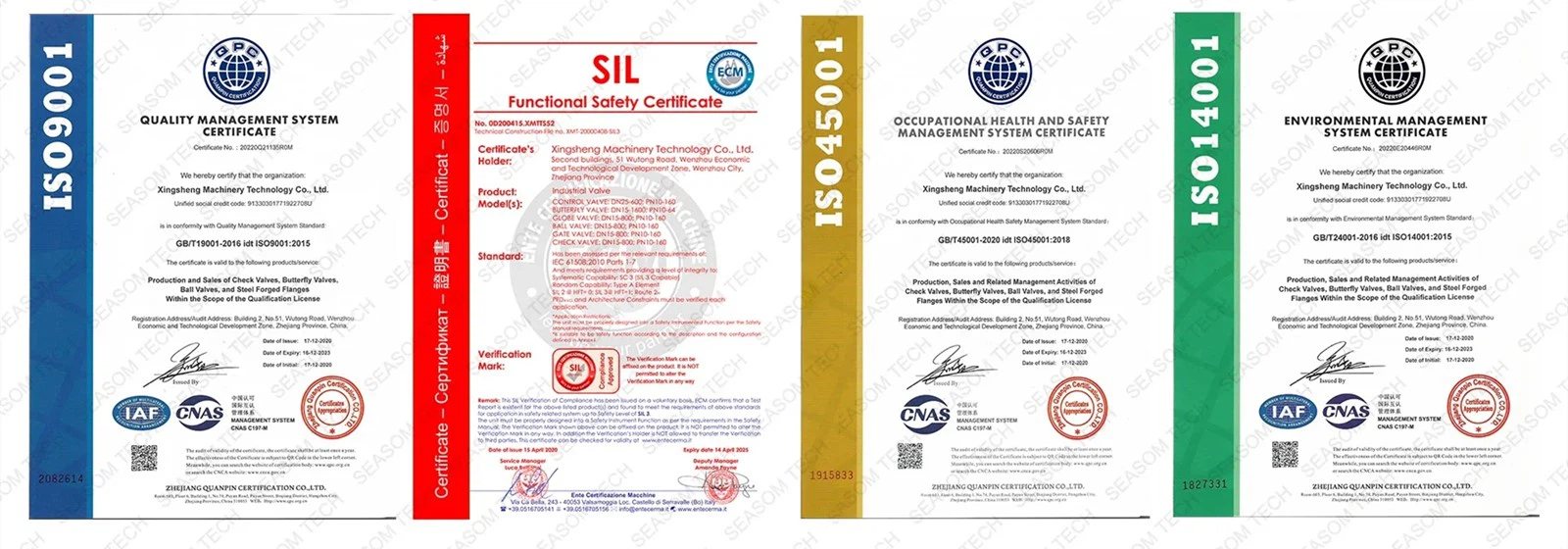
During continuous effort over the past 15 years, Xingsheng has acquired IS0:9001, ISO:14001, and ISO45001 certifications. And 3A certificate for food-grade pipe fitting in the year 2022.
Wide Range of Products
We have a variety of products. Our main product includes all kinds of forged stainless steel flanges, Stainless steel valves, and Stainless steel pipe fittings for both food-grade and industrial applications.
Wide Range of Exports
Xingsheng has more than 10 years of export experience, our main export markets include the United States, South America, Australia, Southeast Asia and Europe. Based on our strict quality control system and quality products. We have exported more and more products worldwide.
Professional Service
With Mature technology and good supporting services, dedicated to strict quality control and thoughtful customer service, our experienced staff members are always available to discuss your requirements and ensure full customer satisfaction. OEM and ODM service is welcomed!
What is Forged Flange?
Forged flanges are used as fittings to form a piping network for cylinders, valves, pumps and other equipment. Forged flanges combine two separate machinery parts together. They can be an extension to a structure in order to make the object stronger.
Features of Forged Flange
Forged flanges offer high strength, excellent pressure resistance, precise dimensions, superior sealing performance, corrosion resistance, and long service life, ensuring safe and reliable connections in demanding industrial applications.
Corrosion Resistance
Depending on the material chosen, forged flanges exhibit excellent corrosion resistance, making them suitable for applications where exposure to corrosive elements is a concern.
Precision
Forging allows for precise shaping and dimensional accuracy, ensuring tight tolerances and proper alignment of bolt holes.
Versatility
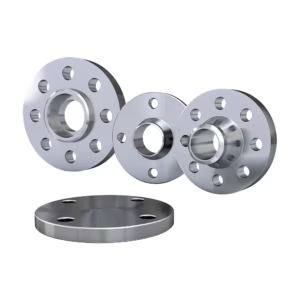
Forged flanges come in various types, such as weld neck, slip-on, socket weld, and blind flanges, providing versatility to suit different piping configurations and requirements.
Pressure Ratings
Forged flanges are available in different pressure classes, allowing users to select the appropriate flange based on the specific pressure requirements of their system.
Temperature Resistance
The forged construction enhances the ability of flanges to withstand extreme temperatures, making them suitable for applications in both high and low-temperature environments.
Reliability
Due to their robust manufacturing process, forged flanges are known for their reliability in critical applications, reducing the risk of leaks or failures.
Sealing Surface
Forged flanges provide a smooth sealing surface, promoting effective sealing with gaskets and preventing leakage.
Ease of Installation
With standardized dimensions and bolt hole patterns, forged flanges are relatively easy to install, facilitating quick and efficient assembly of piping systems.
Types of Forged Flange
Types of Forged Flange include a wide range of designs developed to meet different piping and pressure requirements. Common types are weld neck, slip-on, blind, socket weld, threaded, and lap joint flanges. Weld neck flanges are ideal for high-pressure and high-temperature applications because their tapered hub provides excellent stress distribution.
Welding neck flange
Welding neck flanges are popular for their long tapered neck, with the accompanying connection, and their end is welded to the bottom. The internal diameter of the pipe is the same as the flange. It is useful in extreme jobs where there is a requirement of high stress.
Sliding flanges (slip on)
The tube penetrates the cube of the same as in the form of carbon steel flanges. You do not need to touch the plane to the face to which it is connected with the use of external and internal welding seams. Due to the lower accuracy of the tube life and better positioning flexibility, we can consider it simpler than the neck flange. The mechanical condition of the sliding flange is usually good for exhaustion and strength, but much weaker than the neck-straps.
Blind Flanges
The design is such that it covers the ends of the tube openings, valves, or tubing due to various operating pressures. It is a form of ASME fitting that from a technological point of view is capable to withstand the most extreme working conditions.
Threaded Flanges
Although they do not possess any welding characteristics, they make assembly easy and quick. It is useful for specific applications (e.g., in pipes with high atmospheric temperatures and pressures) where male NPT threaded pipes are utilized.
Advantages of Forged Flange
High Impact
Because the unique impact strength function is significantly improved compared with other solid wall tubes, the ring stiffness is 1.3 times that of the solid wall.
Long Service Life
The pipe under the rated use temperature and pressure, has a service life of more than 50 years, with anti-UV, anti-radiation, so that the product will never fade.
Advantages of Forged Flange
Good Corrosion Resistance
In addition to a few hydrogenating agents, can withstand a variety of chemical media corrosion, the flange has excellent acid, alkali, corrosion resistance, will not rust, will not erode, will not breed bacteria, no electrochemical erosion.
Good Thermal Insulation
Because the material thermal conductivity is low, the thermal conductivity of 20 degrees Celsius is 0.21-0.24W / mk, much smaller than steel pipe (43-52W / mk), purple steel pipe (333W / mk), so PP-R Good tube insulation
Good Heat Resistance
When the working water temperature is 70 degrees, the softening temperature is 140 degrees.
Application of Forged Flange
Petrochemical Industry Forged flanges play an important role in the petrochemical industry, as this is where a multitude of oil and gas pipelines made up of pipes and other components are found: Pipelines are systems that are responsible for transporting oil and derivatives such as biobutanol by means of a system of pumping stations that drive the fluid at an average speed of between 1 and 6 meters per second. Given the complexity and dimensions of their structure, studies on the environmental impact must be carried out before construction. They are centered on steel pipes whose diameter varies from ½ inch (12.7 mm) to 144 inches (approximately 360 cm). Gas pipelines have the same function, transporting materials, but in this case the materials are combustible gases, mainly natural gas. They do this at high pressures. The lines are mostly built underground at a depth of one or two meters depending on the terrain; rarely above ground. It is standard practice that shutoff valves be placed at various points in the pipeline to cut off the flow of gas if necessary.
In both cases, pipelines are used to transport materials that require specific treatment both in their extraction and in their transportation or processing. Oil and its derivatives are very corrosive and contaminating, and natural gas can flow at low temperatures (-161º). The materials that both types of conduits are made from need to be just right for their planned application to avoid negatively affecting the surrounding flora and fauna. This is also why sections of pipe are joined with forged flanges, whose corrosion resistance can be increased thanks to techniques such as cladding / weld overlay.
How to Use Forged Flange
1
Select the Appropriate Flange Type:
Choose the type of forged flange that best suits your application. Common types include weld neck, slip-on, socket weld, and blind flanges.
2
Select the Material
Consider the material of the forged flange based on the requirements of your specific application. Materials like carbon steel, stainless steel, and alloy steel offer different levels of strength and corrosion resistance.
3
Check Dimensions and Specifications
Ensure that the dimensions, pressure ratings, and specifications of the selected forged flanges match the requirements of your piping system.
4
Prepare Piping Ends
Clean and prepare the ends of the pipes that will be joined using the flanges. Ensure that the pipe ends are straight, smooth, and free from any debris or contaminants.
5
Install Gaskets
Place the appropriate gasket between the facing surfaces of the flanges. Gaskets help create a seal, preventing leaks in the joint.
6
Align Bolt Holes
Align the bolt holes of the flanges with those of the connected pipes. Proper alignment is crucial for a secure and leak-free connection.
7
Insert Bolts and Tighten
Insert bolts through the aligned bolt holes and tighten them evenly and progressively. Follow the recommended torque values for the specific size and type of bolts used.
8
Check Alignment
Verify that the flanges are properly aligned and that there are no gaps or misalignments. This ensures a secure and leak-resistant connection.
9
Inspect for Leaks
After installation, inspect the connection for any signs of leaks. Perform a pressure test if necessary to ensure the integrity of the joint.
10
Painting or Coating (Optional)
If required, apply paint or coating to the flanges for additional corrosion protection, especially in corrosive environments.
11
Follow Industry Standards
Adhere to industry standards and guidelines for the specific type of flange and application to ensure compliance and safety.
12
Regular Maintenance
Periodically inspect the forged flange connections for signs of wear, corrosion, or damage. Perform maintenance as needed to ensure long-term reliability.
Maintenance of Forged Flange
A
Visual Inspection – Make sure you visually inspect your flanges for damage or cracks. If you see any signs of wear, you will need to replace the flange. You can use a mirror to inspect the flange from a different angle.
B
Pressure Test – You should pressure test your flanges every year to ensure that they are in good condition and can be used without issues.
C
Corrosion Protection – Some flanges are more susceptible to corrosion than others. You can prevent corrosion by cleaning flanges regularly and using special paint or protective coatings to prevent corrosion.
Production Process of Forged Flange
The method of forging typically consists of the following procedures, which are blanking, heating, shaping, and cooling. The method of forging can be classified as free forging or a die forging operation. Free forging has low productivity and high machining allowance, but the tool is simple and versatile, so it is widely used for forging one-piece and small series forgings with a simple geometry. On the other hand, die forging has the advantages of simple operation, high productivity, mechanization, and automation. Die forgings have high dimensional accuracy, a small machining allowance, and a more reasonable grain structure distribution, which can further improve the service life of flange parts.
Die Forging
Die forging is also known as model forging. Follows the basic steps: blanking, heating, pre forging, final forging, punching and connecting skin, trimming, tempering and shot peening. Common processes include upsetting, drawing, bending, punching and forming. The widely used die-forging machineries are forging hammer , hot die forging press, flat forging system, and friction press. The forging flange is normally of higher quality, typically by die forging, the crystal structure is good, the strength is high and the price is of course costlier.
Free Forging
Free forging refers to a method of forging where the heated iron/steel is anchored and then formed by hammering, pressing, or other methods. Free forging can flexibly form the shape of each product and is suited for making large components or for diversified small-quantity production. As mentioned before, free forgings productivity is low and the machining allowance is large, but the tool is simple and the versatility is large, so it is widely used for forging a single piece and a small batch of forgings with a simple shape.
Our Factory
We have a complete factory production, quality supervision and delivery.
Our main product including all kinds of forged stainless steel flanges, Stainless steel valves, Stainless steel pipe fittings for both food grade and industrial application.
Xingsheng have more than 10 years export experience, Our main export market including: United states, South America, Australia, South east Asia and Europe. Base on our strict quality control system and quality products. We have export more and more products world wide.
Ultimate FAQ Guide to Forged Flange
Q: What is a forged flange?
A: A forged flange is a type of flange that is created by using a forging process. It is a component that is used to connect two pipes or sections of piping together.
Q: What is the difference between a forged flange and a cast flange?
A: A forged flange is made by heating up a piece of metal and using a press to shape it into the desired shape. A cast flange is made by pouring molten metal into a mold and allowing it to cool and harden. Forged flanges are generally stronger and more durable than cast flanges.
Q: What materials are used to make forged flanges?
A: Forged flanges can be made from a variety of materials, including carbon steel, stainless steel, alloy steel, and other metals such as copper and nickel.
Q: What are the different types of forged flanges?
A: There are many different types of forged flanges, including weld neck, slip-on, socket weld, threaded, lap joint, blind, and orifice.
Q: What is a weld neck flange?
A: A weld neck flange is a type of forged flange that has a neck that is welded to the pipe. This type of flange is best suited for high-pressure and high-temperature applications.
Q: What is a slip-on flange?
A: A slip-on flange is a type of forged flange that slides over the end of the pipe and is then welded in place. This type of flange is easy to install and is used in low-pressure applications.
Q: What is a socket weld flange?
A: A socket weld flange is a type of forged flange that has a socket for the pipe to fit into. The pipe is then welded to the flange using a fillet weld.
Q: What is a threaded flange?
A: A threaded flange is a type of forged flange that has threads on the inside and outside of the flange. This allows the flange to be screwed onto the pipe.
Q: Can forged flanges be reused?
A: Forged flanges can be reused as long as they are in good condition and meet the requirements of the piping system. However, it is important to check them thoroughly for any signs of damage or wear.
Q: What is the maximum temperature that forged flanges can withstand?
A: The maximum temperature that forged flanges can withstand depends on the material that they are made from. Carbon steel forged flanges can typically withstand temperatures up to 750°F, while stainless steel forged flanges can withstand temperatures up to 1500°F.
Q: What is the maximum pressure that forged flanges can withstand?
A: The maximum pressure that forged flanges can withstand depends on the class rating of the flange. Class 150 forged flanges can withstand pressures up to 285 psi, while Class 2500 forged flanges can withstand pressures up to 6000 psi.
Q: What are the advantages of using forged flanges?
A: Forged flanges are generally stronger and more durable than cast flanges. They are also able to withstand higher temperatures and pressures, making them ideal for use in high-pressure and high-temperature applications.
Q: Are forged flanges more expensive than cast flanges?
A: Forged flanges are generally more expensive than cast flanges because of the manufacturing process, which involves heating and pressing the metal.
Q: Can forged flanges be customized to fit specific applications?
A: Yes, forged flanges can be customized to fit specific applications. They can be made in different sizes, shapes, and materials to meet the needs of different piping systems.
Q: What is the difference between Class 150 and Class 300 forged flanges?
A: Class 150 forged flanges are designed to withstand pressures up to 285 psi, while Class 300 forged flanges are designed to withstand pressures up to 740 psi.
Q: How do you install a forged flange?
A: To install a forged flange, first make sure that the flange is the correct size and type for the piping system. Then, position the flange over the end of the pipe and align the bolt holes. Insert bolts and tighten them gradually and evenly.
Q: How do you remove a forged flange?
A: To remove a forged flange, first loosen and remove the bolts that hold it in place. Then, use a pry bar or other tool to gently lift the flange off of the pipe.
Q: What are the common applications of forged flanges?
A: Forged flanges are commonly used in oil and gas, power generation, chemical processing, and other industries that require high-pressure and high-temperature piping systems.
Q: What is the difference between a raised face and a flat face flange?
A: A raised face flange has a raised lip around the outside edge of the flange that provides a better seal when the flange is bolted in place. A flat face flange has a flat surface on the outside edge of the flange.
Q: What is a serrated finish on a forged flange?
A: A serrated finish on a forged flange refers to a series of small ridges or grooves that are cut into the sealing face of the flange. This creates better grip and helps to prevent leaks.
Stay informed
Be the first to know about new drops, exclusive offers and flash sales. We won’t spam you, promise.
Get For further information
Add: No.51 Wutong Road, Binhai Industry Zone, Longwan District, Wenzhou City, Zhejiang Province, 325025, China